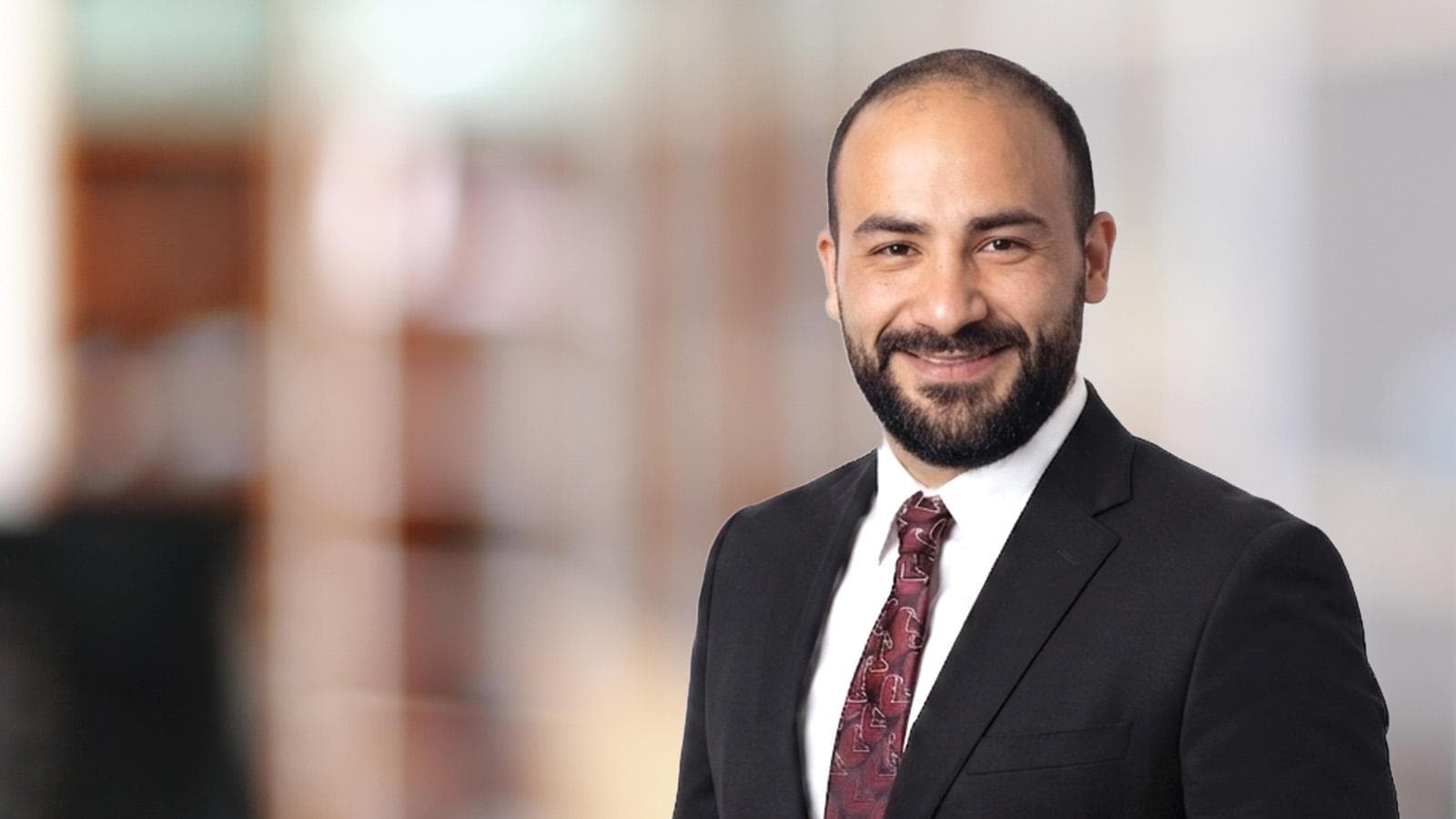
The Bridge to Life: How CarePoint Emergency Medicine Physician Chris Tems Is Redefining Survival

CarePoint's Chris Tems, MD, is the new medical director of HCA HealthONE Aurora's Extracorporeal Cardiopulmonary Resuscitation program. Thanks to Dr. Tems and facility leaders, Aurora is the first hospital in Colorado to have a comprehensive ECPR program, which has already saved many patients who otherwise would have faced near-certain mortality.
May 07, 2026
In the world of emergency medicine, the expected neurologically intact survival rate for a patient in prolonged refractory cardiac arrest — when the patient’s heart has refused to restart after 30 minutes or more of conventional CPR has been performed — has traditionally been near zero. For decades, these cases represented the limit of medical intervention.
At HCA HealthONE Aurora (Aurora, CO), those limits are being rewritten.
Led by CarePoint emergency medicine physician Chris Tems, MD, the recently appointed medical director of the hospital’s new Extracorporeal Cardiopulmonary Resuscitation (ECPR) program, a multidisciplinary team is using extracorporeal membrane oxygen (ECMO) to save patients who otherwise would have faced near-certain mortality.
While ECMO technology is used in other Colorado hospitals, Aurora was the first in the state to establish a comprehensive ECPR program. Across the nation, only a few such programs exist.
The results? They’ve been nothing short of remarkable: To date, 65% of the patients placed on ECMO for refractory arrest at Aurora have not only survived, but nearly all of them retained good neurologic function. If not for Dr. Tems, the program he built from the ground up, and the professionals around him, these people — mothers, fathers, sons, daughters — most certainly wouldn’t be here today.
“The most meaningful part of this work is knowing that nearly every patient we put on ECMO in arrest would have otherwise likely died,” Dr. Tems said. “Instead, we are getting them home to their families.”
How ECPR Works: The Ultimate Life Support
ECPR is a high-stakes rescue technique in which an ECMO machine temporarily assumes the workload of a patient’s heart and lungs.
Here’s how it works, step by step:
- Cannulation: Doctors quickly insert two large tubes (cannulas) into the patient’s femoral artery and vein in the groin. This happens while CPR is still taking place.
- The Circuit: The venous tube drains the oxygen-poor blood out of the body and into the ECMO machine.
- Oxygenation: Inside the machine, an artificial lung (membrane oxygenator) removes carbon dioxide and adds oxygen to the blood.
- Circulation: A mechanical pump pushes oxygen-rich blood back into the arterial system, providing immediate blood flow to the brain and vital organs.
- The “Bridge”: Once the machine is running, the medical team can stop manual chest compressions. This clears the way for doctors to treat the underlying cause of the refractory arrest — removing a blockage in the artery, for example — while the machine keeps the patient alive.
In short, the work of the heart-lung machine enables the medical team to shift from struggling to maintain life through prolonged CPR to actively restoring life.
“I was always fascinated by ECMO and the potential it had to save patients we didn’t have any other options for. There’s no greater reward than watching a patient walk out of the hospital who, without this technology, most likely wouldn’t have had a tomorrow.”
- Chris Tems, MD, CarePoint Emergency Medicine Physician and ECPR Medical Director at HCA HealthONE Aurora
The Genesis of a Lifeline: Redefining the Impossible
The foundation for Aurora’s ECPR program was actually laid nearly a decade ago, at the University of Pennsylvania, where Dr. Tems completed his emergency medicine residency and was first introduced to the concept of resuscitative ECMO.
His interest in ECMO deepened as he completed a specialized training program in San Diego called Reanimate, which taught him how to perform the procedure in real-life scenarios.
“I was always fascinated by ECMO and the potential it had to save patients we didn’t have any other options for,” Dr. Tems said. “There’s no greater reward than watching a patient walk out of the hospital who, without this technology, most likely wouldn’t have had a tomorrow.”
Dr. Tems joined CarePoint as an emergency physician at Aurora in 2018. Two years later, a landmark study out of Minnesota called the ARREST Trial demonstrated remarkable survival rates for refractory arrest patients put on ECMO, even after 60 minutes of traditional CPR had been performed and failed.
The medical team at Aurora gained critical ECMO experience during the COVID-19 pandemic, but because of the massive strain on hospital resources, circumstances weren’t ideal for the implementation of a comprehensive ECPR program.
Everything changed in 2022. In a span of just one week, two patients — both young adults — arrested shortly after arriving at the Aurora emergency department. Working alongside a cardiothoracic surgeon, Dr. Tems helped cannulate both patients for ECMO. They both survived. They both emerged from the crisis neurologically normal. All of a sudden, the need to create a formal ECPR program became undeniable.
That pivotal week secured the institutional support needed to move forward. What began as a vision is now a robust program in which teams from across the hospital — CT surgery, intensive care, cardiology, perfusion, nursing, and administration — work together to provide a seamless continuum of care dedicated to saving lives once considered lost.
Other CarePoint emergency physicians at Aurora, including Drs. Katie Sprinkel, Thomas Seibert, Aaron Wolfe, Patricia Whiteside, and Eric Hill, are also now trained to cannulate patients for ECMO. Dr. Tems mentioned many others from Aurora and HCA Healthcare who have been instrumental in the success of the program.
National Recognition and the Road Ahead
The success at Aurora has already garnered significant attention. Hospital leadership has shared the ECPR protocols and outcomes with HCA executives at the national level, and internationally recognized hospital systems outside of HCA have also sought insights into the program.
Locally, Aurora Mayor Mike Coffman recently toured the hospital to see the life-saving innovation firsthand and meet the heroes behind it. The program is now being implemented at HCA HealthONE Swedish (Englewood, CO), where CarePoint emergency physicians also practice.
“As one of only a handful of ED ECMO centers in the entire country,” Dr. Tems said, “our program is at the cutting-edge of emergency medicine and resuscitation science.”
Dr. Tems is currently engaging with local EMS leaders to implement protocol changes aimed at slashing the time to ECMO cannulation and improving survival odds for the most critical patients. The hospital partnered with Aurora Fire Rescue to identify and rapidly transport appropriate candidates in the prehospital setting. The partnership went live in March, and the first two patients transported under the program both survived.
Beyond the ED, the Aurora team is working closely with medical transport company HCA HealthONE Air Life to provide “retrieval ECMO.” This service enables the team to travel to outside facilities, initiate life-saving ECMO for patients experiencing severe heart or lung failure, and safely transport them back for definitive care. “Retrieval ECMO” has been done for patients in rural Colorado and as far away as Wyoming.
“It’s incredibly rewarding to see a community hospital like Aurora lead the way in Colorado and take its place nationally as far as ECPR goes,” Dr. Tems said. “This program proves that with the right people and the right support, outcomes for the most critical patients can be rewritten.”